


This past week, I walked past the old building that housed one of my first network TV jobs.
CNN used to be nestled next to Penn Station—-armpit of the city.
I would trudge up those speckled stone stairs to hair and makeup at 3:30am, bucket hat pulled down over my eyes to cover the sleep still in them.
I loved being a journalist and TV. It’s what I wanted since I was 4.
I just didn’t love it at that hour.
The building has since been renovated into a less glamorous City MD. The stairs significantly contracted in size.
I sighed as I walked past, recalling my 20s, 30s and early 40s in New York, living and working at the weirdest fringes of the day.
Always tired.
Thinking clouded.
Tethered to a microphone and a desk.
(Living the dream.)
A few years ago, I made some key decisions:
My business, the thing I worked on feverishly in between shots on tv, would become my main hustle.
Focus trumps talent any day.
I took stock of my core values (Adventure, beauty, freedom)
I put systems and processes in place to build a business that reflected them.
In 20 days, I leave for Nice, France.
I’ll be hosting my Samita Lab Mastermind for their annual “Deep Writing and Reflection retreat.”
I will continue to live and work from the south of France for 2 months.
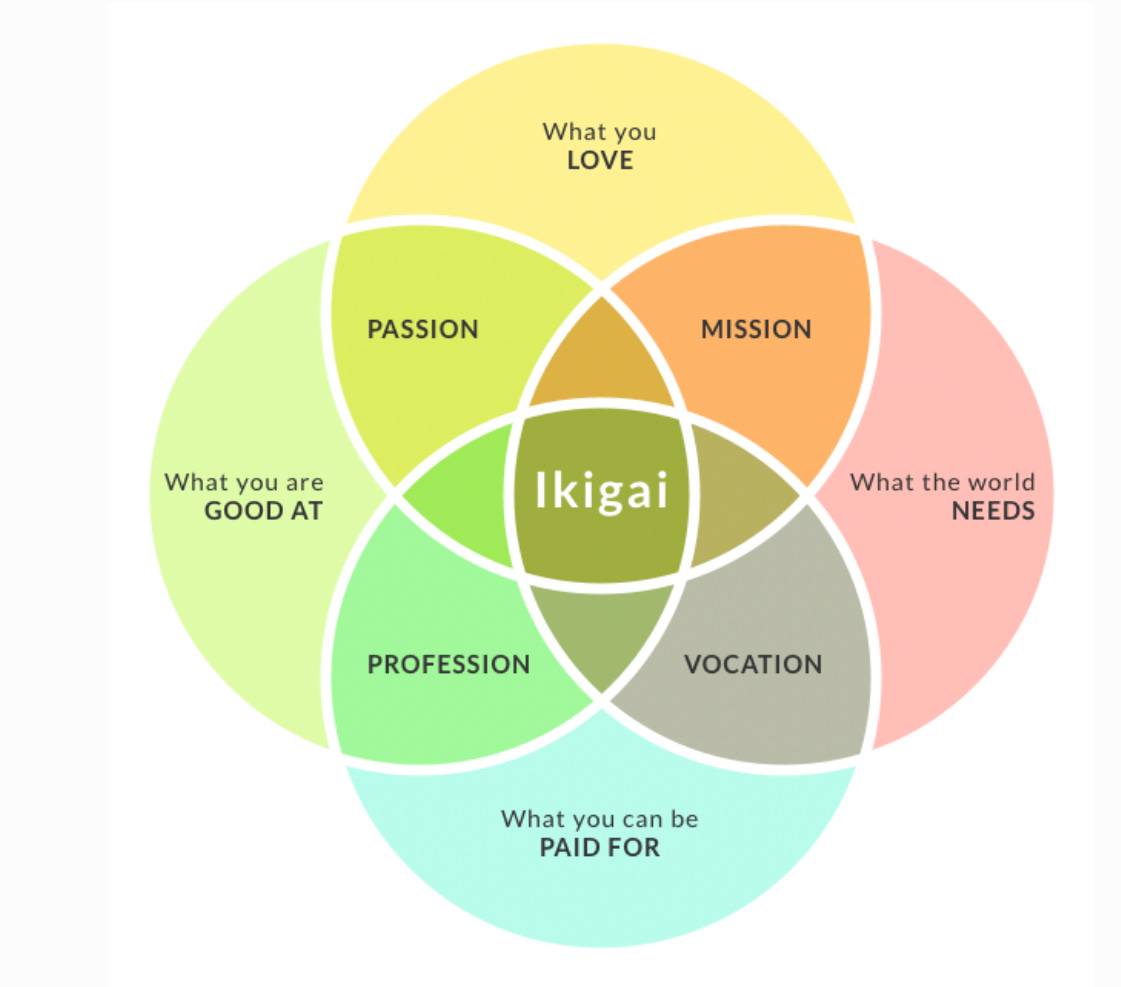
All because, a few years ago, I found something the Japanese call
“Ikigai.”
If you are at a crossroads of some kind, and want a map on how to get somewhere else.
You can find your Ikigai too.
I sits at the intersection of “What you love, what you’re good, what the world needs, and what you can get paid for.”
I break finding your Ikigai down step by step in this 5.12 edition of What I Did Last Week (and what I’m looking forward to)
Step 1 You make a list of what you are passionate about.
Here are mine:
Seeing the world
Travel packing tips
Food
Wine
Writing
You can get a jump start on this by doing the “Finding your core values” exercise
Step 2 Ask yourself, “What are you good at?”
What I am passionate about is raw and honest storytelling. In fact, I’m creating a movement for it with my business. I am deeply passionate about seeing the world, preferably by boat. If you catch me on a Saturday Youtube binge, I’m lapping up videos on travel packing tips. I am passionate about having security and creating abundance that I never realized growing up in an immigrant home.
Here are mine:
Writing
Storytelling
Public speaking
Absorbing information fast
Creating experiences
Creating experiences in other countries
My company is simply the vehicle through which I can take these passions, apply them to the things that the world needs, and make a profit in the process.
Ask yourself, “What did you love doing as a kid? Hours could pass and you could be fully immersed in it. Chances are, the answer lies there. Try answering a few of the
shadow prompts in this link.
Step 3 Ask yourself, “What does the world need?”
I found this in 2 ways:
I’m in front of my community each week, asking them what their challenges are. Recording it.
I write content each day on social media.
Then I double down on what is resonating
Here are mine:
How to tell their story
In writing
In person
How to sell
In writing
In person
How to set Boundaries (and the Language for it)
In writing
In person
How to realize a vision
How can you find out what is keeping your ideal client up at night? Survey them
I've found that the most successful entrepreneurs position their product or service to solve a very specific problem.
Exercise
Step 1 Make a list of 30 people. Create a Calendly link with times you are available to speak
Step 2 Use this script: “I'm creating something. I'm focusing it on x. Do you have 15 minutes so I may ask a few questions and ask you what is keeping you up at night about it?”
If yes, send Calendly link.
Step 3 Use Otter.ai to transcribe as you are interviewing each person. Be sure to let the interviewee know that you are recording and transcribing so you can be exacting in your analysis.
Step 4 Ideally, you interview 15-20. This will offer you real-time, real life concerns. You will already be in the loop and even at the forefront of the fresh thinking.
2-3 big themes could emerge. The concerns could fall into 3-4 main categories.
Step 4 What you can be paid for?
This answer took a long time. I spent 9 years experimenting with different styles of events, different durations of training, different staged productions.
I started by hosting individual events, interviewing ceos
I began charging for those events
I built a membership
I created a Public Speaking Masterclass- 6 weeks
I hosted live staged events
I started getting 1:1 clients public speaking clients
Finally, weary of the endless marketing cycle, I put everything into one product and make it a high ticket item.
This became my Samita Lab Mastermind, ideal for a very specific woman:
A world traveller
Has a growth mindset
At a moment of inflection or change, but no map on how to get there
Has integrity and follow through
Has some urgency about a story she wants to tell
In it, I could be paid for
Storytelling coaching
Public speaking coaching
Creating international retreats
Content creation coaching
Mindset coaching
Creating 1 staged event
The medium through which I can express my passion is my business, The Women’s Leadership Lab today.
Reflecting on my journey from the dimly lit corridors of CNN to the vibrant settings of Nice, France, embracing change and finding one's Ikigai can lead to a life reimagined. My early mornings in makeup chairs and the late nights at the anchor desk were not just career phases; they were stepping stones to discovering a deeper passion that combined personal fulfillment with professional success. By tuning into my core values and leveraging my talents, I've not only crafted a lifestyle lined up with my dreams but also designed a business that empowers others to find their path.
To anyone standing at the crossroads, remember: your Ikigai is not just a framework but a journey towards a life filled with passion, purpose, and personal growth.